
Aster & Plot shares practical, down-to-earth guidance on practical flower gardening for uk growers for readers across the UK.
- 0123456789
- Angle Bd Abdelmoumen & rue soumaya, Résidence
- [email protected]
Aster & Plot shares practical, down-to-earth guidance on practical flower gardening for uk growers for readers across the UK.
 By Charlotte Penrose
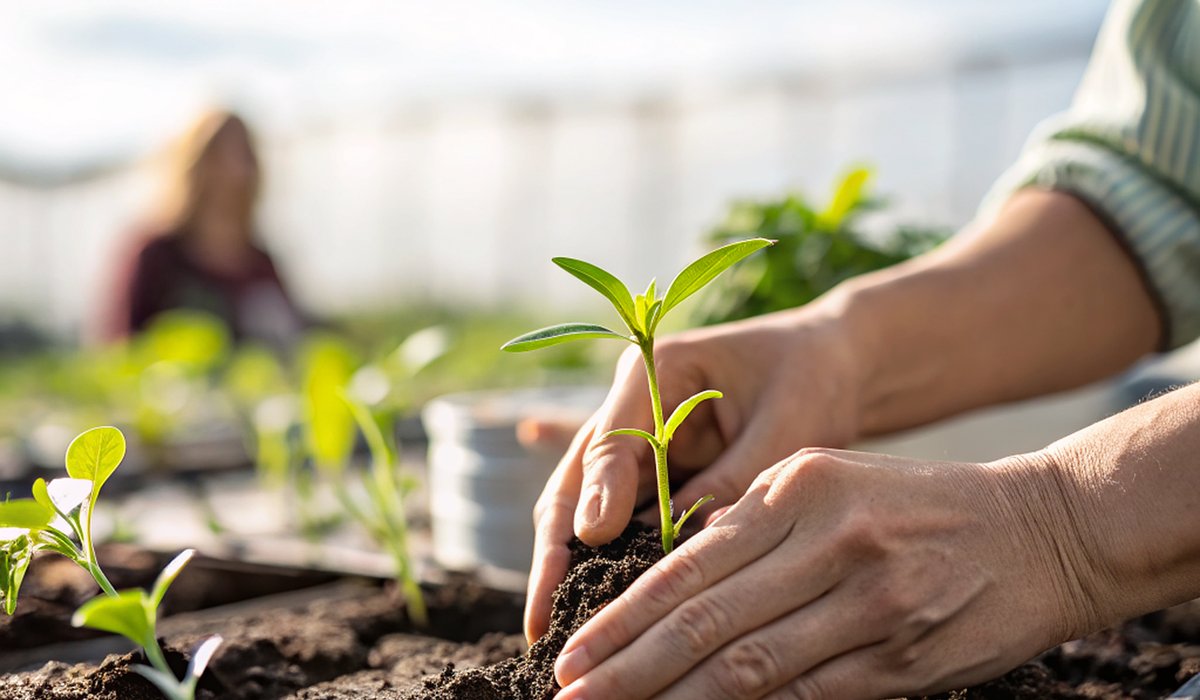
Water is heavy. A full ten-litre can weighs over ten kilograms once you add the can itself, and carrying that at arm's length across a garden soon makes itself felt in your wrist and shoulder. But weight is only half the story. The wrong tool damages plants: a hard jet flattens seedlings, scatters seed compost, exposes shallow roots and washes nutrients straight out of pots and hanging baskets. Getting the can and the nozzle right is one of the cheapest, most satisfying improvements you can make to a routine you'll repeat hundreds of times a season.
Ignore the pretty ones first and think about three practical things: capacity, balance and the rose.
Whatever you choose, make sure the rose is removable and that replacement roses are easy to find. A can without a usable rose is only half a tool.
A watering can rose is not just a sprinkler head; it is a shock absorber. A fine rose with many small holes delivers a soft, rain-like spray that lands without displacing compost or flattening young growth. This is the rose to use on seedlings, newly sown patches, newly planted plugs and anything in a seed tray. A coarse rose with fewer, larger holes gives a faster flow for established plants, filling a watering trench or sluicing down a patio.
If you can stretch to two cans, keep a fine rose on one permanently and fit a coarse rose to the other. If you only have one can, buy a spare rose. Brass roses clog less and hold their shape, but a well-made plastic rose is perfectly adequate provided you clean it. A can with a rose fitted but turned upside down gives you a surprisingly effective gentle jet for reaching the base of a plant without wetting the leaves.
A hose is convenient but a blunt instrument unless the nozzle is right. Look for a nozzle with several clearly separated settings rather than an infinite adjustment, because you want to find the gentle setting instantly and not accidentally blast a bed of lettuce.
Hose diameter matters too. A wider hose delivers more water at lower pressure, which is usually kinder to plants and to your tap. If your water pressure is low, a long narrow hose will disappoint you; shorten it or use two shorter lengths joined with a good quality connector.
Water in the morning where you can, so foliage dries before evening and slugs and fungal problems have less to work with. Direct water at the soil, not the leaves; a rose held low and close does this naturally. Fill cans from a water butt where possible, as the water is nearer air temperature and kinder to young roots than cold mains water. For pots, water until it runs out of the drainage holes, then stop, rather than little and often.
Rinse cans after use, especially if you have used liquid feed, and store them upside down so they drain. Bring hoses, nozzles and connectors indoors before the first hard frost, as trapped water splits plastic and brass alike. Descale a clogged rose by soaking it in a weak vinegar solution and clearing the holes with a pin. Check washers and replace them at the first drip, and lag or isolate outdoor taps before winter. Looked after properly, a good can and a sensible nozzle will serve you for fifteen years or more.


We are not gonna make spamming
