
Aster & Plot shares practical, down-to-earth guidance on practical flower gardening for uk growers for readers across the UK.
- 0123456789
- Angle Bd Abdelmoumen & rue soumaya, Résidence
- [email protected]
Aster & Plot shares practical, down-to-earth guidance on practical flower gardening for uk growers for readers across the UK.
 By Oliver Bennett
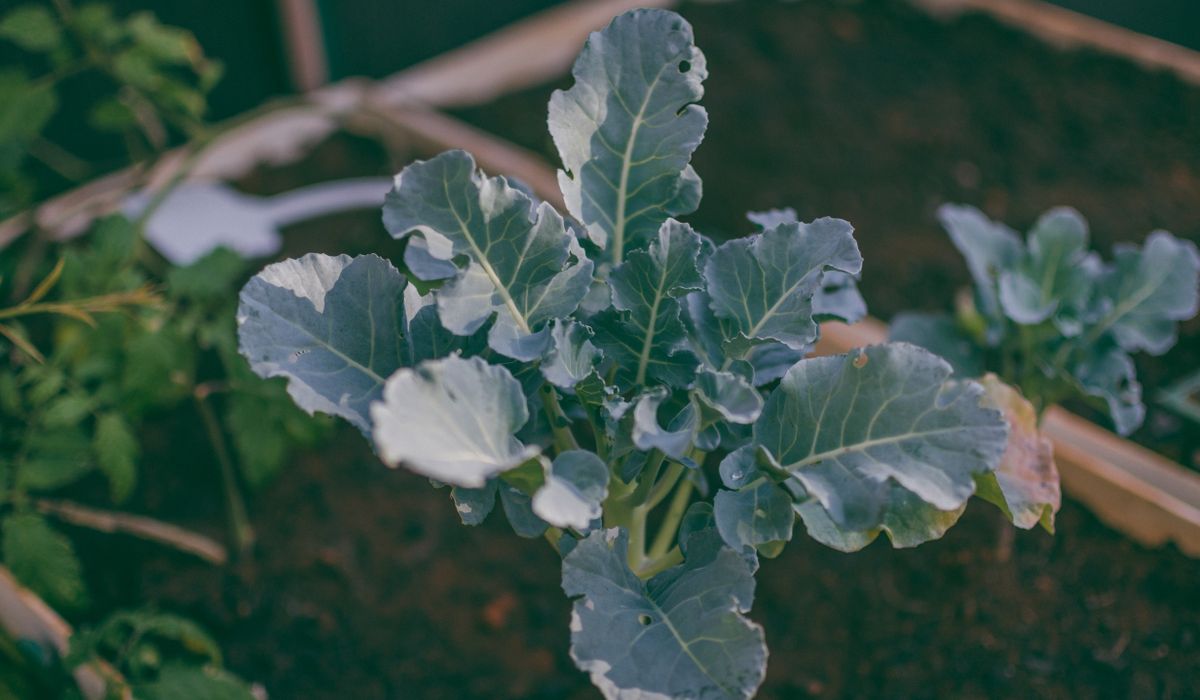
Stand at the end of a long border and your eye does something predictable: it hunts for familiar shapes. If every plant is a one-off, the eye flits about and never settles. If the same handful of plants and colours reappear, the eye relaxes and travels along the border in a smooth line. That is repetition doing the quiet work, and rhythm is what you get when you space those repeats thoughtfully.
The practical approach is to pick three to five key plants and use each of them at least three times through the border. Everything else is supporting cast. One-off plants act like full stops: valuable for a focal point, exhausting if used everywhere. A border of fifty different plants all used once is a plant collection, not a design.
Odd numbers look natural because our eye cannot easily split them into symmetrical halves. Three, five or seven plants knit into a soft, organic clump. Two plants side by side tend to look like a pair of sentries, and four begs to be divided into twos.
You do not have to buy ten of the same thing to create a repeat. Repeating a colour across different plants is often cheaper and more interesting. A thread of deep purple can run the length of a border through a dark-leaved salvia, a violet allium, a purple hebe and the smoky heads of Verbena bonariensis.
Three touches of a colour is usually the minimum before it registers as deliberate. Use a limited palette: two main flower colours plus white, green and grey foliage to separate them. Repeat foliage too, because leaves carry the border for far longer than flowers do. A repeated mound of Stachys byzantina, a bronze fennel or a soft grey artemisia will hold the composition together in July and again in October, long after the flowers have gone.
A border arranged as a tidy scaffold of tall at the back, medium in the middle and short at the front looks like a choir photograph. It is orderly and completely static. Aim instead for a gentle wave: let a mid-height plant such as nepeta or achillea drift 30–40cm into the front, and allow the occasional tall plant to step forward into the middle for depth and surprise.
As a rough guide, work to a front layer of 20–40cm, a middle layer of 50–80cm and a back layer of 90cm upwards. The important word is gently: change height in small increments, clump to clump, rather than one dramatic jump. In a small garden, resist the temptation to line everything tall against the fence. Pulling the tallest plant forward now and then gives a narrow border far more depth than you would think possible.
Rhythm is repetition with a beat, and the beat is the space between repeats. Even spacing is mechanical and dull. Instead, place your repeated clumps at irregular but deliberate intervals: the first at one metre along, the next at 2.5 metres, the next at 4.5 metres, then back to the sequence.
If a path runs alongside the border, use it. Plant the same thing at intervals along the walk so it keeps reappearing as you move, and put a repeated anchor plant at any corner or turn so the eye is guided round it rather than stopping dead. A repeated vertical such as thalictrum, verbena or a slim grass works as a metronome, marking time down the length of the border. The aim is a border that pulls you towards the end of it.
Rhythm should carry through the year, not just through one week in July. Choose plants that hand the repeat on to one another.
Ten or twelve well-chosen plants, repeated with care, will always look more designed than forty used once. Start with one short stretch of border, get the repeats right there, and let the rhythm spread.


We are not gonna make spamming
